
Thanks for your interest!
Simply fill out the form below and one of our team
will be in touch shortly
News
08 Apr 2026

While wholesale energy prices often receive the most attention, a growing proportion of costs now come from non-energy costs, also known as non-commodity costs – and these are on the rise. In this article, we explain what’s changing, why it’s happening, and what it could mean for your organisation.
The UK energy system is undergoing a major transformation as part of the government’s Clean Power 2030 ambitions and longer-term net zero targets. Electricity demand is expected to double by 2050, driven by increased electrification across transport, heating, and industry. To support this shift, significant investment is required in the UK’s electricity infrastructure.
These changes are leading to rising non-energy costs, which suppliers may pass on to customers now and in the coming years.
Non-energy costs are charges added to your electricity bill that don’t relate directly to the wholesale price of energy. Instead, they fund essential parts of the UK’s energy system, including:
Several key factors are driving the rise in non-energy costs:
Together, these pressures are increasing the overall cost of maintaining and developing the electricity network.
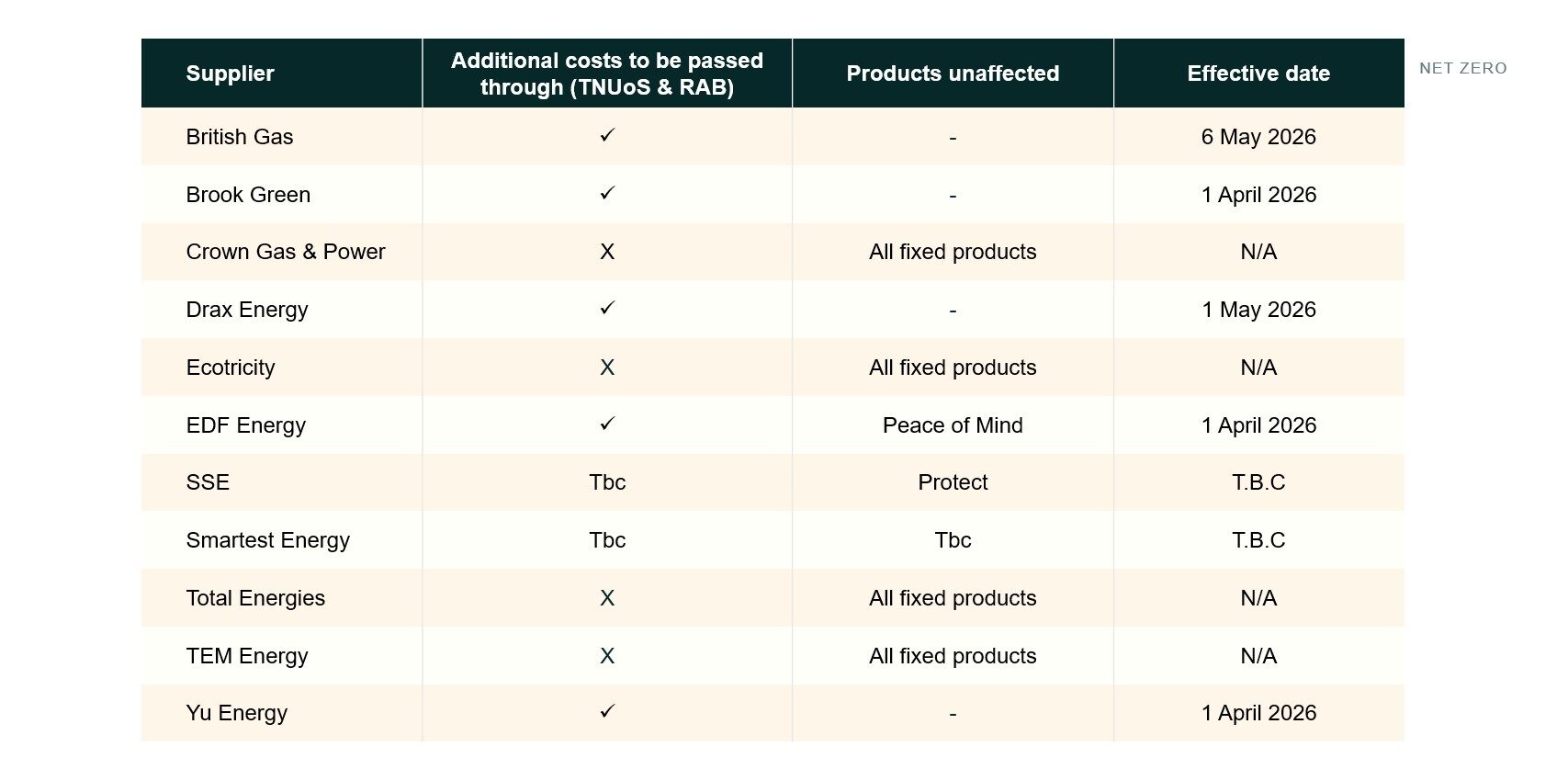
Energy suppliers are responding to these rising costs in different ways:
Here is what we know now.
We remain committed to helping our clients navigate the rapidly-evolving energy market. Through our strong relationships with suppliers, we keep pace with industry developments, ensuring our clients are well-positioned to manage their budgets with confidence."

Tim Golding
Supplier Manager
While unexpected cost increases can be challenging, it’s important to understand that these changes reflect a system-wide shift in how electricity is generated, delivered, and funded in the UK.
Stay informed and prepared by reviewing supplier communications carefully. Meanwhile, we remain on standby for any specific questions our clients have about their contract and how these changes impact them.
Energy suppliers are responding in different ways. Some may absorb the additional charges, others will pass them on in bills. In some cases, costs may already be factored into existing contracts.
The changes reflect a broader shift in the UK’s electricity system, and similar charges are likely to affect all consumers over time.