Understanding Scope 1, 2 and 3 emissions is a vital step for organisations that need to meet carbon reporting requirements, respond to stakeholder expectations, or build a credible pathway to net zero.
For many UK organisations, Streamlined Energy and Carbon Reporting, commonly known as SECR, is the starting point. It requires qualifying organisations to report energy use and associated greenhouse gas emissions in their annual reports. But for many teams, the challenge is not simply knowing that they need to report. It is knowing what data to collect, which emissions fall into each scope, and how to turn that information into a clear, compliant and useful disclosure.
This guide explains what Scope 1, Scope 2 and Scope 3 means in the context of SECR, what organisations should prioritise, and how better emissions data can support wider energy efficiency, ESOS, and net zero planning.
What are Scope 1, 2 and 3 emissions?
Scope 1, 2 and 3 emissions are categories used to organise greenhouse gas emissions according to where they occur and how directly they are controlled by an organisation.
Scope 1: Direct emissions
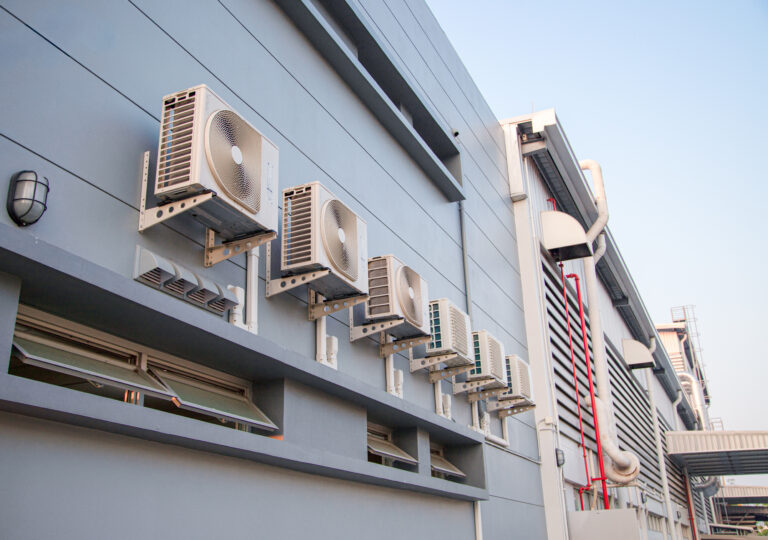
Scope 1 emissions are direct emissions from sources controlled by your organisation. Typical examples include fuel used in company-owned vehicles, on-site combustion from boilers or equipment, and fugitive emissions such as leaks from refrigeration or air conditioning systems.
In practical terms, this is often the first area to assess because the data usually sits within your own operations. Fuel records, mileage logs, fleet data, site equipment records and maintenance information can all help build a clearer picture.
Scope 2: Indirect emissions from purchased energy
Scope 2 emissions are indirect emissions from the generation of purchased energy consumed by your organisation. This commonly includes electricity and may also include purchased heat or steam where relevant.
The main data source is usually your utility information, such as electricity consumption in kilowatt-hours. Accurate utility data is particularly important for SECR because it helps connect carbon reporting with energy efficiency opportunities.
Scope 3: Other indirect value chain emissions
Scope 3 covers other indirect emissions that occur across your value chain. Examples include employee commuting, business travel, waste disposal, supplier emissions, outsourced activities, transportation and distribution, leased assets, and the use or disposal of products.
This is often the most complex category because the data may sit outside your organisation. It can require input from suppliers, logistics providers, employees, customers and other stakeholders.
Our”Getting to grips with Scope 3” white paper highlights that Scope 3 often accounts for more than 70% of total emissions, which is why it is becoming an increasing focus for organisations moving from basic compliance towards credible net zero planning.
What should organisations report under SECR?
SECR is designed to improve transparency around energy use and carbon emissions while encouraging organisations to identify efficiency improvements.
Our SECR service supports the collation, calculation and reporting of energy consumption and carbon emissions across Scopes 1, 2 and 3, helping organisations comply and identify measures that reduce greenhouse gas emissions.
For most organisations in scope of SECR, the priority is to collect accurate data for energy consumption and associated emissions. This means establishing a reliable view of operational energy use, fuel use, transport fuel and electricity consumption before expanding into more complex value chain categories.
Why Scope 1 and Scope 2 data should come first
For organisations starting their SECR journey, Scope 1 emissions and Scope 2 emissions should usually be the first areas to organise.
This is not because Scope 3 is unimportant. It is because Scope 1 and Scope 2 are more directly connected to your operational control, your energy bills and your immediate compliance requirements. They also provide a practical baseline for identifying energy efficiency opportunities.
For example, Scope 1 data may reveal opportunities to reduce fossil fuel use across buildings or vehicles. Scope 2 data may highlight inefficient electricity consumption, sites with unusual usage patterns, or opportunities to review procurement, metering or energy management.
This is where SECR can become more than a reporting task. Done well, it gives your organisation a clearer view of how energy is being used, where emissions are concentrated, and where operational improvements could deliver both carbon and cost benefits.
Where does Scope 3 fit into SECR?
Scope 3 emissions reporting is becoming more important because customers, suppliers, investors and larger organisations increasingly want better value chain data.
Even where Scope 3 is not the immediate compliance priority, many organisations are being asked to provide emissions data to support their customers’ own carbon reporting. Even smaller organisations that do not meet SECR or ESOS thresholds can face pressure from larger organisations calculating and setting targets for their own Scope 3 emissions.
This creates a commercial reason to improve data maturity. If your organisation can respond confidently to emissions data requests, you are better placed to maintain supplier relationships, support procurement processes and demonstrate environmental responsibility.
Our “Getting to grips with Scope 3” white paper also reframes this challenge as an opportunity. Rather than viewing Scope 3 as another compliance burden, it can be used to identify efficiency gains and innovation opportunities across the value chain.
Common Scope 3 categories to consider
When businesses begin Scope 3 emissions reporting, it is helpful to focus on the areas that are likely to have the biggest impact and where change can most easily be influenced, including:
- business travel
- employee commuting
- waste generated
- upstream transportation
- downstream transportation
These areas are relevant to many sectors because they connect directly with day-to-day business activity. Business travel can often be reduced through better planning and virtual meetings. Employee commuting can be influenced through travel policies, EV schemes, public transport encouragement or cycle-to-work schemes. Waste can be reduced through better procurement, product design, reuse and recycling. Transportation emissions can be addressed through supplier engagement and logistics choices.
For organisations with more complex products or services, life cycle assessment can also help identify emissions across manufacturing, use and disposal.
How to calculate emissions for reporting
Our existing quick guide breaks emissions calculation into four practical steps: collect data, apply emission factors, calculate total emissions, and compile and analyse the results.
Collect activity data
Start with the information you can access most reliably. For Scope 1, this could include fuel consumption, vehicle records and on-site equipment usage. For Scope 2, this usually means electricity consumption from utility bills or meter data. For Scope 3, this may involve supplier information, travel data, commuting patterns, waste records or logistics data.
Apply emissions factors
Activity data needs to be converted into carbon emissions using recognised emissions factors. Use reliable sources such as the Department for Energy Security and Net Zero, the Greenhouse Gas Protocol and the US Environmental Protection Agency.
Calculate total emissions
The basic calculation is: Emissions = activity data x emission factor. For example, natural gas usage can be converted into carbon dioxide equivalent by multiplying the volume of gas used by the relevant emissions factor.
Compile and analyse the results
Finally, emissions should be organised by scope and source. This helps create a clearer report and allows teams to identify hotspots, improvement areas and future reduction opportunities.
What makes emissions reporting difficult?
Carbon reporting can feel daunting because it requires accurate data, technical knowledge and coordination across different parts of the organisation.
Common challenges include:
- collecting data from multiple departments, sites, systems and suppliers
- dealing with gaps or inconsistent formats
- choosing the right calculation approach
- keeping pace with evolving standards and reporting requirements
- finding time and expertise alongside day-to-day responsibilities
These challenges are particularly visible in Scope 3, where much of the data sits outside direct operational control. Our “Evolving landscape of net zero” white paper notes that addressing Scope 3 requires working closely with suppliers, logistics and delivery partners, employees and, where relevant, understanding the lifecycle of products.
How SECR connects with ESOS and net zero
SECR is often viewed as a compliance requirement, but it can also support broader energy and carbon management.
For organisations that also qualify for ESOS, the data collected for SECR can help build a clearer understanding of energy consumption and areas of significant energy use. Our ESOS service manages the process from data collection to reporting, with energy and carbon analysts calculating energy consumption and identifying areas for improvement.
ESOS Phase 3 introduced additional requirements, including an action plan and annual progress reporting. For the current Phase 4 reporting period, organisations need to comply if they meet employee or financial thresholds.
Bringing SECR and ESOS activity together can help organisations move beyond one-off reporting. It can create a stronger foundation for energy efficiency, cost reduction and long-term decarbonisation.
This also supports net zero planning. Our net zero framework is built around Measure, Prepare and Deliver: collecting and analysing data, defining baselines, identifying opportunities, setting targets, creating a carbon roadmap and maintaining regular reporting.
Turning reporting into action
The real value of Scope 1, 2 and 3 emissions data is not simply the report itself. It is what your organisation does with the insight.
A clear emissions baseline can help you:
- respond more confidently to customer and supplier requests
- identify energy efficiency measures
- prioritise carbon reduction projects
- support ESOS action planning
- strengthen net zero strategy
- improve internal accountability
- demonstrate progress to stakeholders
For many organisations, the biggest gains come from connecting compliance, energy data and carbon strategy. This is where a partner with energy, carbon and compliance expertise can make reporting more manageable and more commercially useful.
Need support with Scope 1, 2 and 3 emissions?
If your organisation needs help understanding Scope 1, 2 and 3 emissions, preparing an SECR report, or improving the quality of your carbon data, Zenergi can support you.
Our Streamlined Energy and Carbon Reporting service takes care of the collation, calculations and reporting of energy consumption and carbon emissions for Scopes 1, 2 and 3. The service is designed to help organisations remain compliant while identifying energy efficiency measures that reduce greenhouse gas emissions.