Energy and carbon management is often seen as a regulatory obligation. For many organisations, it is something to complete, submit and forget about until the next reporting cycle. But when it is managed properly, energy and carbon compliance can do far more than satisfy a reporting requirement.
A strong approach to compliance reporting can help organisations understand where energy is being used, where carbon emissions are being generated, and where practical efficiency improvements can be made. By turning compliance data into operational insight, organisations can reduce waste, improve cost control, support long-term planning and make more informed investment decisions.
At Zenergi, we help organisations move beyond simple reporting. Our role is to make energy and carbon compliance clearer, more manageable and more valuable, so that mandatory schemes such as the Energy Savings Opportunity Scheme (ESOS) and Streamlined Energy and Carbon Reporting (SECR) become part of a wider strategy for business efficiency.
What is energy and carbon management?
Energy and carbon management is the process of understanding, reporting and improving how an organisation uses energy and manages its associated emissions. It brings together energy consumption data, carbon reporting, compliance obligations, building performance, operational behaviour and reduction planning.
For many organisations, the starting point is mandatory reporting. The UK’s SECR framework requires certain organisations to report energy and carbon data in their annual accounts. Qualifying organisations include quoted companies, as well as large unquoted companies and LLPs that exceed statutory thresholds for employees, turnover and balance sheet totals.
ESOS, meanwhile, is a mandatory energy assessment scheme for large UK organisations. The scheme, enforced by the Environment Agency, requires qualifying organisations to report on energy usage every four years – with ESOS phase 4 covering the period from 6 December 2023 to 5 December 2027.
Used together, these frameworks can create a clearer picture of how energy is consumed across buildings, transport, processes and operational activity. That visibility is the foundation for better business decisions.
Why compliance reporting should not sit in isolation
Energy and carbon reporting can become inefficient when it is treated as a standalone annual or four-yearly task. Data is collected under pressure, calculations are completed for submission, and the wider business often receives limited value from the process.
That approach can create three problems.
- Firstly, the same data may need to be gathered repeatedly by different teams, increasing administrative burden.
- Secondly, reporting outputs may not be translated into practical actions.
- Thirdly, efficiency opportunities may be identified too late to influence budgets, procurement decisions or capital planning.
This is where compliance and operational planning should work together. The value is not only in producing a compliant report, but in using the evidence behind that report to support better decisions.
For example, SECR can help an organisation understand annual energy use and emissions, while ESOS can provide a deeper review of significant energy consumption and identify improvement opportunities. Our SECR service supports full compliance from data collation to calculations and reporting of energy consumption and carbon emissions across Scopes 1, 2 and 3. The output helps organisations identify how to reduce consumption and costs.
How SECR reporting supports business efficiency
SECR reporting requires qualifying organisations to disclose energy use, greenhouse gas emissions and related information as part of annual reporting. GOV.UK guidance explains that the environmental reporting guidelines are designed to help companies and LLPs comply with SECR regulations, while also supporting voluntary reporting on environmental matters, greenhouse gas reporting and KPIs.
From an efficiency perspective, the value of SECR reporting lies in the visibility it creates. To report accurately, organisations need to gather and validate information such as electricity consumption, gas consumption, transport fuel use, grey fleet data, emissions calculations and energy efficiency actions.
That process can highlight gaps in data quality, inconsistent records, unusual consumption patterns or areas where energy performance is not being actively managed. Once those issues are visible, organisations can begin to address them.
For example, an organisation may discover that several sites have incomplete billing records, that transport mileage is not being captured consistently, or that energy efficiency actions are not being recorded in a way that supports annual reporting. Addressing these issues can improve governance, reduce year-end pressure and create a stronger baseline for future efficiency work.
Our SECR support helps organisations manage the collection, calculation and reporting of energy consumption and carbon emissions, while improving confidence in the accuracy and quality of disclosures.
How ESOS turns energy data into action
While SECR provides annually recurring reporting visibility, ESOS is more audit-led. It requires qualifying organisations to calculate total energy consumption, identify areas of significant energy consumption, complete audits under the direction of a lead assessor, submit a notification of compliance and keep records in an evidence pack.
The strategic value of ESOS is that it identifies practical opportunities to reduce energy consumption. These opportunities may relate to buildings, industrial processes, transport, controls, heating, cooling, lighting or operational behaviour.
For ESOS phase 4, organisations have an opportunity to use the compliance period as more than a deadline-driven exercise. Rather than waiting until the final stages of the cycle, organisations can use ESOS preparation to review energy data earlier, prioritise audits and align recommendations with business planning.
ESOS criteria has been evolving with each compliance phase, with the third compliance period introducing additional requirements for action plans and annual progress updates, enabling organisations to set out how they are taking forward ESOS recommendations.
That matters because it increases the focus on accountability. Organisations are expected to move from identifying opportunities to reporting progress against intended energy-saving measures, increasing participants’ accountability for taking action to reduce energy use.
From reporting obligation to operational insight
The organisations that gain the most value from compliance reporting are those that ask better questions of their data.
Instead of asking only, “What do we need to submit?”, they ask:
- Which sites, assets or processes are driving the highest energy use?
- Where are we seeing avoidable consumption?
- Which buildings need more detailed investigation?
- Which efficiency measures offer the strongest operational or financial case?
- Which actions can be aligned with planned maintenance, refurbishment or equipment replacement?
- What evidence do we need to support future investment decisions?
This is where a carbon management system, such as our Carbon Accounting Platform becomes useful. Not simply as software, but as a repeatable process for collecting data, validating information, assigning responsibility and reviewing performance over time.
For multi-site organisations, this can be especially important. A consistent carbon management system can help bring together utility data, transport data, site-level consumption, emissions factors, reporting outputs and improvement actions. That structure reduces the risk of compliance becoming a fragmented exercise managed separately by finance, estates, sustainability and operations teams and reduces the risk of error from manual reporting processes
How compliance data supports cost reduction
Energy is an operational cost, not just a carbon metric. When organisations improve the quality of their energy and carbon data, they also improve their ability to manage cost.
The ESOS scheme has resulted in significant annual energy efficiency savings across buildings, industrial processes and fuel efficiency within the ESOS population.
The connection between compliance and cost reduction is practical. ESOS audits can identify inefficient systems. SECR can highlight annual consumption trends. TM44 air conditioning inspections can reveal opportunities to improve cooling performance. Energy Performance Certificates (EPCs), Display Energy Certificates (DECs) and Minimum Energy Efficiency Standards (MEES) reviews can support building improvement planning.
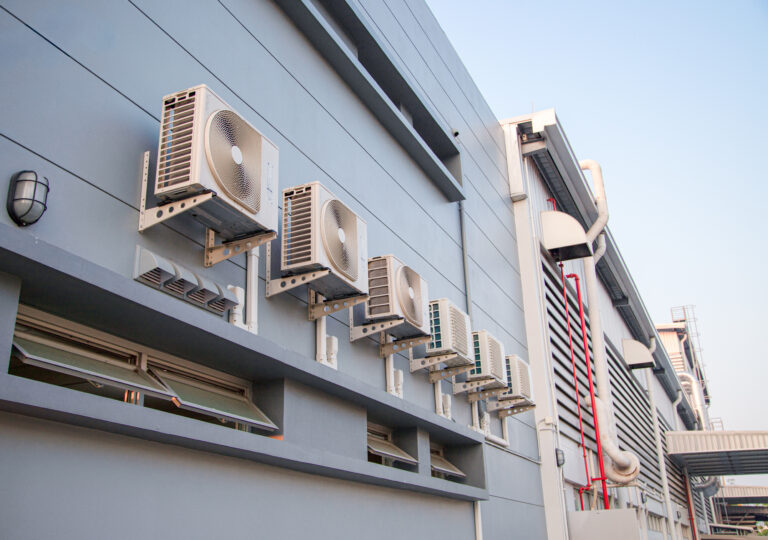
Our TM44 service, for example, reviews air conditioning system efficiency, checks for faults and provides recommendations to make systems more cost- effective to run, including energy usage data, projected operating costs and savings from implementing recommendations
When these services are connected, they create a stronger route from compliance evidence to efficiency action.
Connecting compliance with decarbonisation strategy
A decarbonisation strategy should be based on evidence. Without accurate consumption data, emissions calculations and asset-level insight, organisations risk setting targets that are difficult to prioritise, fund or deliver.
Compliance reporting can provide the baseline. ESOS can identify opportunities. SECR can create annual visibility. Energy audits can assess specific buildings or processes. TM44 inspections can highlight cooling inefficiencies. EPCs and MEES can support property performance planning. Heat decarbonisation plans, solar PV, metering and data services can then help organisations move from insight to implementation.
Zenergi’s wider services reflect this joined-up approach. Products are organised across Comply, Deliver, Buy and Net Zero, with compliance services including ESOS, SECR, DECs, EPCs, MEES, TM44 and Carbon Border Adjustment Mechanism (CBAM), and delivery services including energy audits, heat decarbonisation plans, metering and data services, solar PV and Climate Change Agreements (CCAs).
This is why energy and carbon management should not be limited to annual reporting or broad net zero ambition. It should support operational decisions, investment planning and measurable efficiency improvements.
Building a more effective energy and carbon management approach
A practical approach to energy and carbon management should include five core stages.
- Establish your compliance position: Start by understanding which schemes apply to your organisation. This may include ESOS, SECR, TM44, EPCs, DECs, MEES, CCAs or CBAM, depending on your size, structure, estate, sector and operations. Navigating compliance can be complex, but our team can help you understand which schemes apply.
- Improve data quality: Compliance becomes more valuable when the underlying data is accurate, complete and easy to access. This includes energy bills, meter data, transport information, site details, asset records, floor areas, operational changes and evidence of energy efficiency actions. Good data reduces reporting pressure and creates a stronger basis for decisions.
- Identify significant energy users: Once data is organised, organisations can identify where the greatest consumption sits. In a high-usage building, this may be an inefficient HVAC system, a production process, or poor operational control. This stage helps focus time and budget where it can have the greatest impact
- Prioritise practical efficiency actions: Not every recommendation can or should be implemented immediately. The strongest plans prioritise actions based on cost, savings potential, disruption, compliance risk, asset condition, carbon impact and alignment with planned works. This is where compliance reporting begins to support business efficiency directly.
- Monitor progress and update the plan: Energy and carbon performance should be reviewed regularly, not only at the point of reporting. ESOS participants must now submit annual progress updates against action plan commitments in the two subsequent years after submission of the action plan.
This approach helps organisations maintain momentum and demonstrate progress.
Why Zenergi is a strategic partner for compliance-led efficiency
At Zenergi, we support organisations, from a basic compliance submission, to more complex data collation, calculations and reporting. Whatever your requirements and resource, we help you understand your obligations, manage your data, meet reporting requirements and identify practical ways to improve efficiency.
Our work across ESOS and SECR reporting helps organisations connect compliance with wider energy and carbon objectives. Our support includes data collation, emissions calculations, energy audits, evidence packs, action planning, progress reporting and the identification of energy-saving opportunities.
As a strategic partner for operational efficiency, not just a provider of compliance reports, we help organisations connect compliance with wider services across energy audits, TM44 inspections, EPCs, MEES planning, metering and data services, heat decarbonisation plans, solar PV, energy procurement and carbon reduction planning.
By combining regulatory expertise, energy data insight, engineering knowledge and sustainability support, we help organisations move from mandatory reporting to informed action.
Turning compliance into a stronger business case
The business case for energy and carbon management is becoming clearer. Compliance reporting can improve governance, but it can also support cost control, operational resilience and long-term investment planning.
For finance teams, it can improve visibility of energy-related cost drivers. For estates teams, it can help prioritise building improvements. For sustainability teams, it can provide evidence for carbon reduction. For leadership teams, it can support better risk management and accountability.
A well-managed approach can also help organisations avoid duplication. Instead of collecting data separately for SECR, ESOS, audits and internal reporting, organisations can build one more consistent approach to energy and carbon information.
That makes reporting more efficient and makes the outputs more useful.
Speak to us about energy and carbon management
Compliance reporting should not be the end of the process. It should be the start of a better conversation about how your organisation uses energy, how it can be optimised and how carbon reduction can be delivered more efficiently.
If you need support with ESOS phase 4, SECR reporting or a wider decarbonisation strategy, we can help you turn reporting obligations into a clearer plan for action.
Speak to our team to review your compliance position, improve your energy and carbon data, and identify opportunities to reduce consumption, cost and emissions.